Being a Change Practitioner Does Not Excuse Us From the Journey

I have spent years telling clients that everyone is a Transform (person affected by change) first.
A note on that word, since plenty of you learned this differently. The role AIM has long called the Target, the person who actually has to change, we are now trying other words like Transform. Same role, same place in the methodology, same slot in the CAST of Characters. We are trying it rather than declaring it, which feels like the only defensible way to change a word after using it for decades.
We looked hard at the alternatives, and every one of them broke something that matters: the role's meaning, or the CAST of Characters acronym practitioners have carried for decades. Transform kept both.
So, Transform. It takes a beat to get used to.
And to be clear about what I am not saying: use the word that works in your organization. If your people know Target and it lands without friction, keep it. If Transform reads better in your culture, use that. If neither fits and you have something better, use yours. AIM has always taught tailoring to frame of reference, and that applies to our own vocabulary before it applies to anyone else's. What matters is that the role is understood, not what it is called. I wrote up the full reasoning separately, including why culture beats correctness on this one and where the word change might sit on your own curve.
Sponsors are Transforms. Agents are Transforms. The person running the change is going through the change. It is one of the first things I think, and I have always believed it.
Then I put AI into Accelerating Implementation Methodology (AIM) that has been in the field for decades, and found out what it feels like from the inside.
Why I jumped in
Two things, and only one of them was curiosity.
I was genuinely interested. But the harder driver was one I have been hearing in client organizations for as long as I have done this work. Do more with less. It has been said to every team I have ever supported, usually right before a budget cut, usually with no accompanying answer for how.
For the first time there was something attached to that sentence that might actually be an answer. So I jumped in.
And I hit the curves head on. Not as an observer, and not as the practitioner. As the person on the curve.
The curve I teach
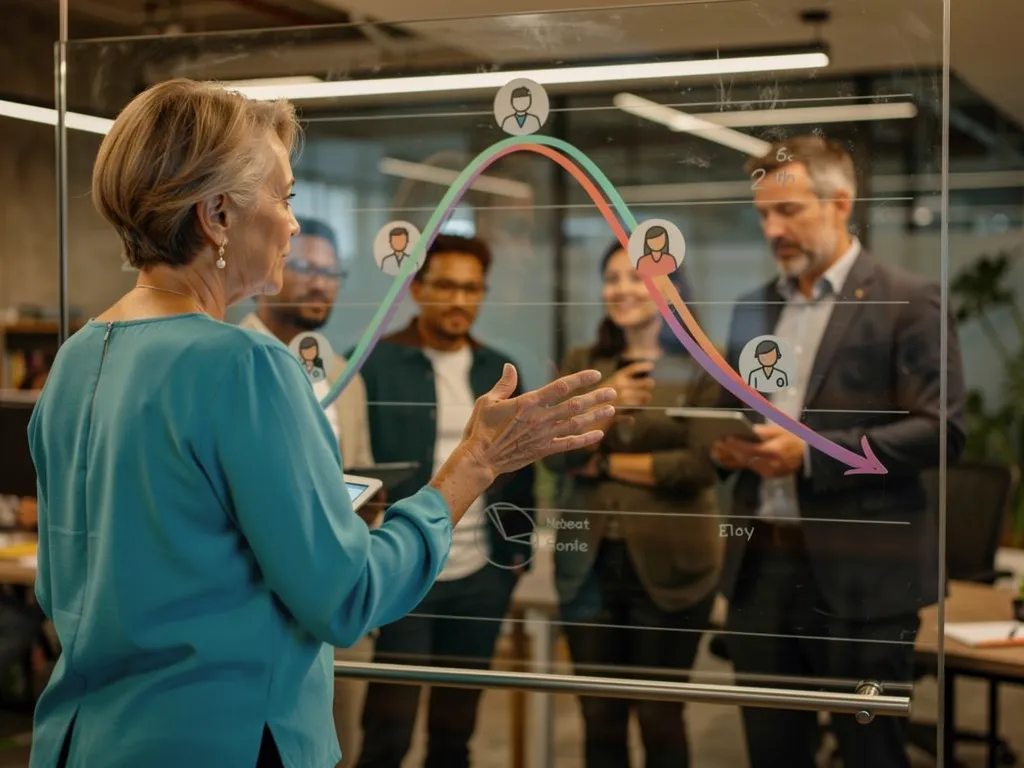
AIM works with two change curves rather than one. The journeys people take when a change is experienced as an opportunity and as a loss are distinct, and a practitioner rarely gets to choose just one. Most changes carry both at once, opportunity for some people, loss for others, sometimes both for the same person on different days, so diagnosing where each person or group sits on each curve, simultaneously, is the work that has to happen before anything else. IMA's overview covers both curves and the five pillars of readiness.
I know both cold. I have experienced them for years.
Knowing the curve does not exempt you from it. It just means you can name the stage while you are stuck in it, which is a smaller advantage than it sounds like.
What Informed Doubt actually sounded like

Uninformed Certainty is the fun part. The mapping from AI capability to AIM practice looked clean. I could see the whole thing.
Then I started building, and the doubt was not philosophical. It was not "is this good for our profession." It was smaller and much more personal.
Can I actually do this. What is it going to take. How many hours will I lose before this returns anything.
The early friction was mundane and relentless. AI Memory was the worst of it. I would build context carefully, get somewhere real, come back the next day and start over. Constant forgetting where we left off. Re-explaining the methodology, the client, the constraint, the decision we had already made, before any new work could happen. The tool did not remember, so I had to, and carrying that context was the actual cost of the work.
Nobody puts that on a slide. But that is where doubt lives. Not in the ethics panel. In the fourth time you paste the same background in one week.
Wow and Ugg, sometimes in the same hour

There were moments of real wow. Something came back that would have taken me a day, and it was good, and I could see the whole practice shift.
Twenty minutes later, Ugg. Confidently wrong. Plausible and unusable. It had quietly drifted from the method, inside a paragraph that read beautifully.
I kept treating those swings as noise, as evidence I had not figured it out yet. They were not noise. That oscillation is the curve, compressed into an afternoon.
Why you go around the curve more than once

The curve is usually drawn as one arc with an end on it.
That is not how this has worked. Every capability release resets part of the loop. Something I reasoned through carefully six months ago became the wrong answer, and I was back at Uninformed Certainty on the new thing while sitting at Informed Certainty on the old one.
If you feel incoherent about AI right now, that may be why. You are not confused. You are on several curves at once.
The negative curve was running too

The negative change curve was running too, and I should say so plainly. There is real loss here. Craft that took years to build gets compressed. The value of being the person who constructs the deliverable goes down. The value of being the person who knows whether it is right goes up. Those are not the same skill, and the trade is not free.
My bargaining sounded like drawing lines about what AI would never touch. Some of those lines held. Most of them moved. That should have told me something earlier than it did.
Where other change practitioners actually are

This is the part that has been most instructive.
I have watched change practitioners land on completely different curves, at completely different stages, all in the same conversation.
Some are at never. I will not use that. Full stop.
Some are in denial about capability, which sounds more technical. It cannot do a Key Role Map. I have heard that one specifically, more than once, and it is worth noticing what it really is. It is not a claim about the tool. It is a claim about whether the thing we do is reducible.
Then comes the harder stage, the one that arrives when the capability question gets answered. It can do it. Then what is my job.
That question is not resistance. That is the negative curve doing exactly what it does when something real is being lost. It deserves a serious answer, not reassurance.
And then, for some, acceptance. Not enthusiasm. Acceptance.
You cannot push anyone through the curve

I know that. I teach that. I have still had to relearn it this year, because when you are further along you badly want to shortcut someone else's Informed Doubt with your own Informed Certainty. It does not transfer. Your certainty is not evidence to someone standing at a different stage.
What I can do is support. Match the response to the stage they are actually in rather than the stage I wish they were in. Take the loss seriously when they name it. Give them something bounded and real to try, and the standing to reject the output. Stop selling.
The structural point underneath all of this: change practitioners are Transforms in this change with almost no Sponsor. Nobody is reinforcing our adoption. We are expected to shepherd everyone else through a curve that nobody is shepherding us through.
Which is worth sitting with, because we already know what to do about it. ChangePro exists for exactly this position, the person inside a change they did not choose who still has to be steady for someone else. We normally send employees to it. I would suggest we are overdue to send ourselves.
If you are running the initiative rather than living inside it, that is different work and a different program.
Where are you in the curve?

On August 6, I am part of a free sponsored ACMP webinar, AI in Change Management.
I am going to share what we have built, what it took, what I check before I trust any of it, and how to stay true to the method while moving faster. I am looking forward to the other half of it just as much, which is hearing where everyone else is. Some of you are at never. Some of you are at then what is my job. Both are useful in the room.
So, two questions before then.
Where are you in the curve?
And are you using AI with AIM?
Being a change practitioner does not excuse us from the journey.
Register for AI in Change Management, August 6
Frequently Asked Questions
What is a Transform in the AIM methodology?
Transform is the newer term some practitioners are trying for the role AIM has long called the Target, the person who actually has to change. It occupies the same place in the CAST of Characters and means the same thing; organizations are encouraged to use whichever word lands without friction for their own culture.
Why does AIM use two change curves instead of one?
Because a single change is rarely experienced only one way. AIM works with two curves because the journeys people take when a change feels like an opportunity and when it feels like a loss are distinct, and most changes carry both at once for different people, or even the same person on different days. Diagnosing where each person sits on each curve is the work that has to happen before anything else.
Can experience with the change curve exempt a practitioner from going through it themselves?
No. Knowing the curve does not exempt anyone from it. It only means you can name the stage you are in while you are stuck in it, which is a smaller advantage than it sounds like, as this account of adopting AI inside AIM makes clear.
Why do people move through the change curve more than once with AI?
Because AI capability keeps advancing, resetting part of the loop each time. An answer reasoned through carefully months ago can become the wrong one, putting a practitioner back at Uninformed Certainty on the new capability while still at Informed Certainty on the old one. Feeling incoherent about AI right now often means you are on several curves at once, not that you are confused.
What should a change practitioner do when watching others resist AI adoption?
Match the response to the stage the other person is actually in, not the stage you wish they were in. Take their sense of loss seriously when they name it, offer something bounded and real to try, give them standing to reject the output, and stop selling. Certainty at one stage does not transfer to someone standing at a different one.