When the Bartender Talks About Claude
How ready are your people for AI?Take the AI Readiness Assessment
Author: Ann Marvin | Peacock Hill Consulting powered by IMA Worldwide | Field Notes
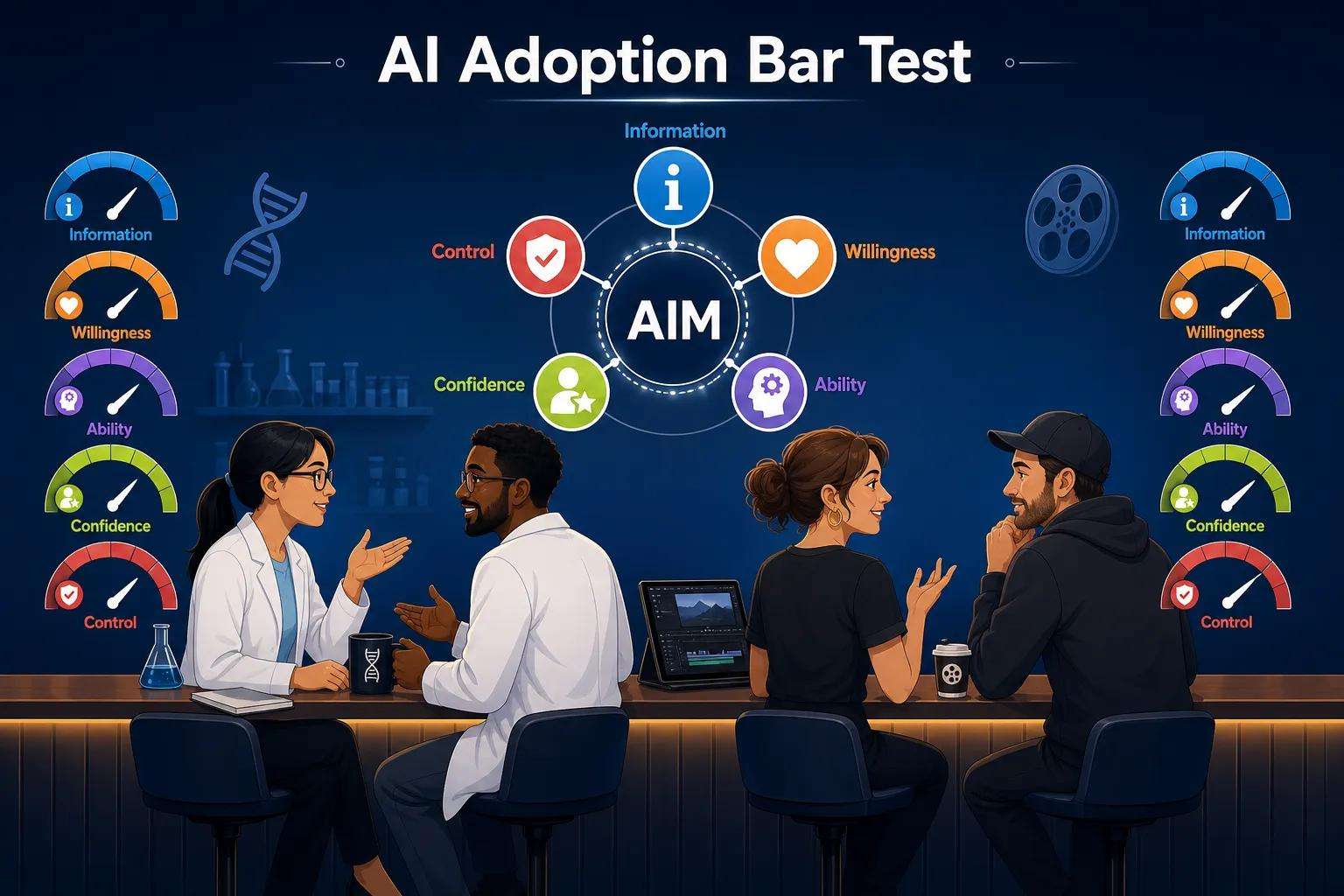
A signal from the bar, the salon, and the seat next to you about where AI adoption really sits. My day began with polite distance and puzzled looks. It ended at a neighborhood bar, talking about film and AI with four people I'd only just met. AI was the thread tying those conversations together.
I work in transformation; change management is the practice that holds it together. Right now, AI is the biggest transformation every organization faces outside of M&A. So when I describe what I actually do: implementing AI, building tools for change leaders, embedding AI into a forty-year methodology, I expect people to lean in. Yesterday, many leaned back. Polite pauses. Slight retreats, the tiny gestures people make when they don't want to follow your enthusiasm into a conversation.
When I travel, I make a habit of finding a local bar or restaurant and talking to whoever's there. It's one of the clearest ways I learn. The bar is where the day untangles. Executives rarely tell you what they actually think about AI in a conference room. Strangers at a bar usually do.
At the next stool, a couple working in biomed were bright-eyed and unabashedly enthusiastic about AI: the tools they use, the decisions AI is accelerating, the pace of change in their work. They weren't hedging; they were solving problems and moving fast. The bartender didn't ask what AI is. He described what his small business had already done: specific steps, clear lessons, measurable results. There was no formal change program and no consultant on retainer; his team had run their own implementation and learned quickly.
Then the conversation shifted, through a reference to friends in film, and within a minute biomed gave way to movies. The same thread, AI, carried us across industries without anyone having to translate. That fluidity is notable: when a topic moves this easily between strangers in unrelated fields, it has crossed a cultural threshold. It is no longer niche.
That contrast matters because earlier that day, in meetings about my professional work, people who are responsible for leading change had quietly stepped away from the topic. The adoption curve we teach—early adopters, fast majority, slow majority, laggards—does not align with current observations. Job title, seniority, or org chart no longer reliably predict who will adopt or apply AI first.
The models are ready. Your people may not be. Find out in about 4 minutes.
What AIM Says About It
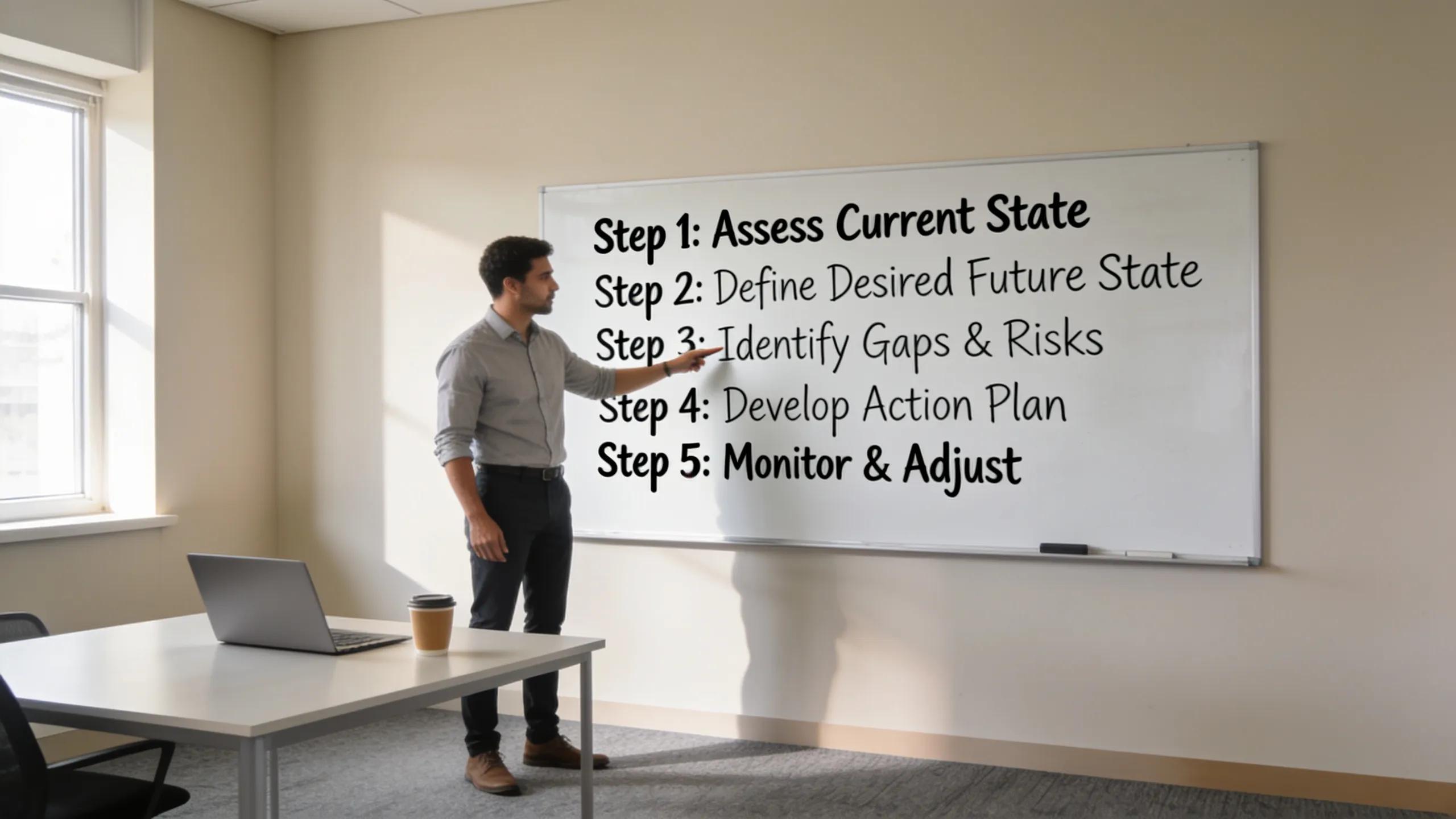
The Accelerating Implementation Methodology (AIM) — the AIM methodology behind this analysis — frames readiness with five elements: Information, Willingness, Ability, Confidence, and Control. In a healthy adoption sequence, these elements build on each other. An employee gains information, develops willingness, builds ability through practice, earns confidence through early wins, and feels a degree of control over how the change affects their work. That sequence produces sustainable adoption.
Each element plays a distinct role. Information alone does not move people; it is necessary but not sufficient. Willingness is where motivation lives, and it is shaped by perceived relevance, trust in leadership, and belief that the change is survivable. Ability requires hands-on practice, not just training exposure. Confidence builds only when people experience small, visible wins. Control, the final element, is what converts a compliant adopter into a committed one. When people feel they have agency over how a change lands in their work, they stop resisting it and start owning it.
The bar test showed me those elements are no longer moving in lockstep. Willingness is appearing where we didn't plant it. A bartender is past willing and into doing. A researcher is operating with confidence. A film conversation springs up between strangers. Meanwhile, many people whose role it is to lead organizational adoption are still working on willingness, despite having access to information. This is causing a gap that calls for a refined AI change management strategy to better align leadership and workforce readiness.
This misalignment is a diagnostic signal for organizational change. When willingness and ability are developing faster in the informal population than in the formal leadership layer, the change strategy needs to recalibrate. The question is no longer only "how do we move the workforce?" It is also: "how do we close the gap between what the workforce is already doing and what the leadership layer is prepared to sponsor?"
That recalibration is not a failure of leadership. It is a structural feature of transformations that move faster than planning cycles. The response is not to slow the workforce down; it is to accelerate the diagnostic work at the top.
Three Things I'm Sitting With

First: Resistance is landing in unexpected places. Pockets have flipped, and my job now includes diagnosing where willingness actually sits before I design a change sequence. Assuming resistance flows from the front line upward is no longer a reliable default. In this environment, a change leader must map willingness empirically, not organizationally. That means conducting listening sessions, informal interviews, and pulse checks that cut across hierarchy rather than following the org chart. The data will surprise you.
Second: Application-ready voices are already inside most organizations. They're often outside the obvious functions, not waiting for permission, and they become powerful change agents when sponsors notice and back them. These individuals have already crossed the willingness and ability thresholds. The leverage point is connecting them to formal sponsors who can amplify their momentum rather than inadvertently suppress it through slow-moving approval structures. Identifying and activating these informal champions is one of the highest-return actions available to a change leader right now.
Third: The quiet back-aways are data. When the people tasked with guiding change sidestep AI conversations, the gap is upstream of the workforce, not downstream. Those small social signals matter in transformation work. A pause, a subject change, a sudden interest in checking a phone: these are not neutral behaviors. In change management terms, they are indicators of unresolved willingness or unacknowledged uncertainty. They deserve the same diagnostic attention as any other resistance signal. Naming that uncertainty directly, in a safe setting, is often all it takes to begin moving a leader from avoidance to engagement.
The bar test isn't a formal study. It's a signal, and signals matter. This week's signal is that public conversation about AI is already past some of the people whose job it is to lead that conversation.
What I'm Going to Do More Of (and Invite You to Try)
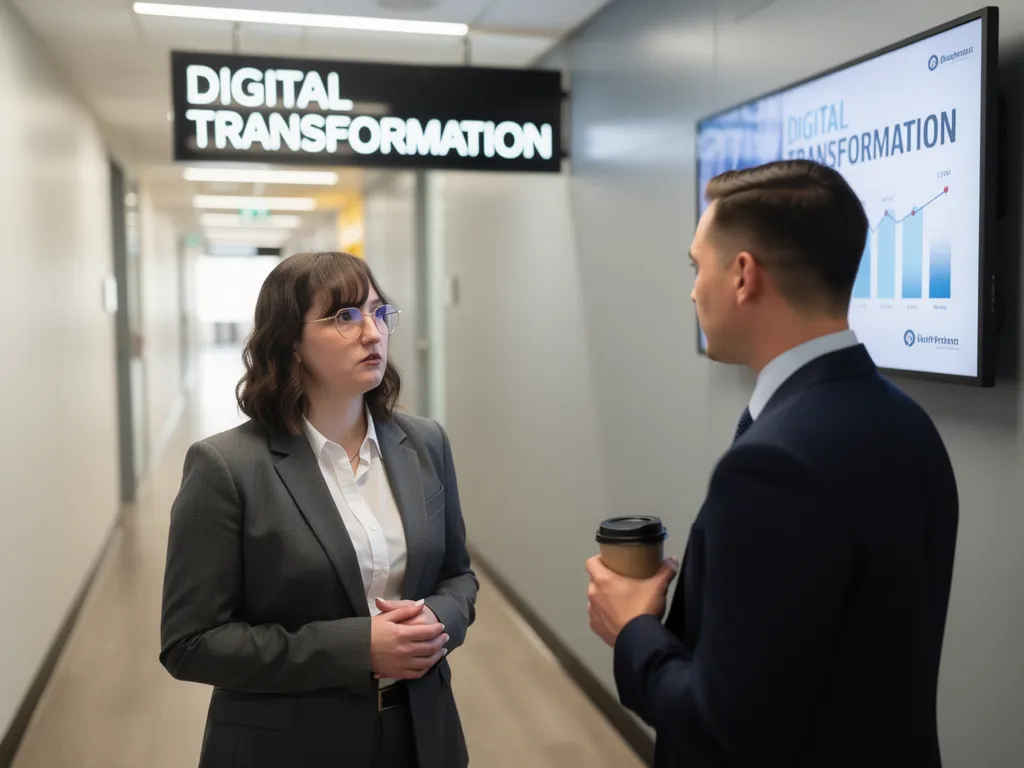
Step outside formal channels. Talk to the people around you, and stay curious. The bar, the salon, the plane: those conversations are telling me more about where AI adoption is headed than many slide decks. It's worth listening closely to them.
The informal layer of any organization, and of any community, carries leading-indicator data about where a transformation actually stands. Change leaders who build a practice of listening to those signals will diagnose more accurately and design more effectively than those who rely solely on survey results and town halls.
Practically, this means scheduling time outside of formal channels. Have lunch with someone two levels below you who works in a different function. Ask your front-desk staff what tools they are using at home. Sit with the team that processes the highest volume of operational work and ask what slows them down. These conversations are not a substitute for structured change diagnostics, but they are a valuable complement, and they surface intelligence that structured tools rarely capture.
If you are working in AI implementation right now, pay attention to where energy and application are already showing up, even where you didn't expect them. Then ask: what would it take to connect that energy to the formal change program? The answer to that question is often where the real acceleration lives.
The models are ready. Your people may not be. Find out in about 4 minutes.
What This Means for Change Management
There is a critical distinction between AI awareness and AI adoption inside organizations. Public familiarity with AI tools like Claude, as exemplified in everyday conversations such as those at the bar, reflects a broad cultural awareness and curiosity. However, this awareness does not automatically translate into successful AI adoption in the workplace. The difference lies in depth and application: awareness is knowing about AI and its possibilities, while adoption requires employees to integrate AI into their daily workflows effectively and sustainably.
This widespread public familiarity can create a false sense of confidence among organizational leaders that rolling out AI solutions internally will be straightforward. The reality is far more complex. According to the Boston Consulting Group's "AI at Work 2025" report, although 74 percent of frontline workers use AI daily, 60 percent of companies fail to generate material value from AI, and only 4 percent achieve substantial value at scale. This gap highlights that mere usage or exposure does not guarantee transformative impact.
The Accelerating Implementation Methodology (AIM) specifically addresses this behavioral gap at go-live by focusing on the progression from mere information and willingness to ability, confidence, and control—key stages for embedding AI into work practices successfully. AIM helps to bridge the divide between surface-level awareness and deep, committed adoption, ensuring that employees not only understand AI tools but also develop the skills and agency necessary to leverage them effectively. For change leaders, this means prioritizing readiness diagnostics and interventions that move beyond awareness toward genuine empowerment and ownership in AI adoption.
Conclusion

For change and transformation leaders, the lesson is clear: listen beyond formal forums. Casual conversations reveal where willingness and practical application are already living, often in unexpected places. By seeking out those voices and supporting them, leaders can surface strong change agents and accelerate adoption. Start the work by being curious: talk, ask, and pay attention to the signals around you to stay ahead in the AI transformation journey.
About the Author
Ann Marvin is Founder of Peacock Hill Consulting and Chief of AI Tools at IMA Worldwide (Implementation Management Associates).