The Importance of New Document 781 in Current Context
TL;DR: We stop solving problems. Not because we can't, but because the solution wasn't ours, or because we're waiting on someone else to go first. The way back is smaller than we think. It starts with one question: What can I actually do about this right now, with what I have?
The Blanket, the Mop, and the Solutions That Weren't His
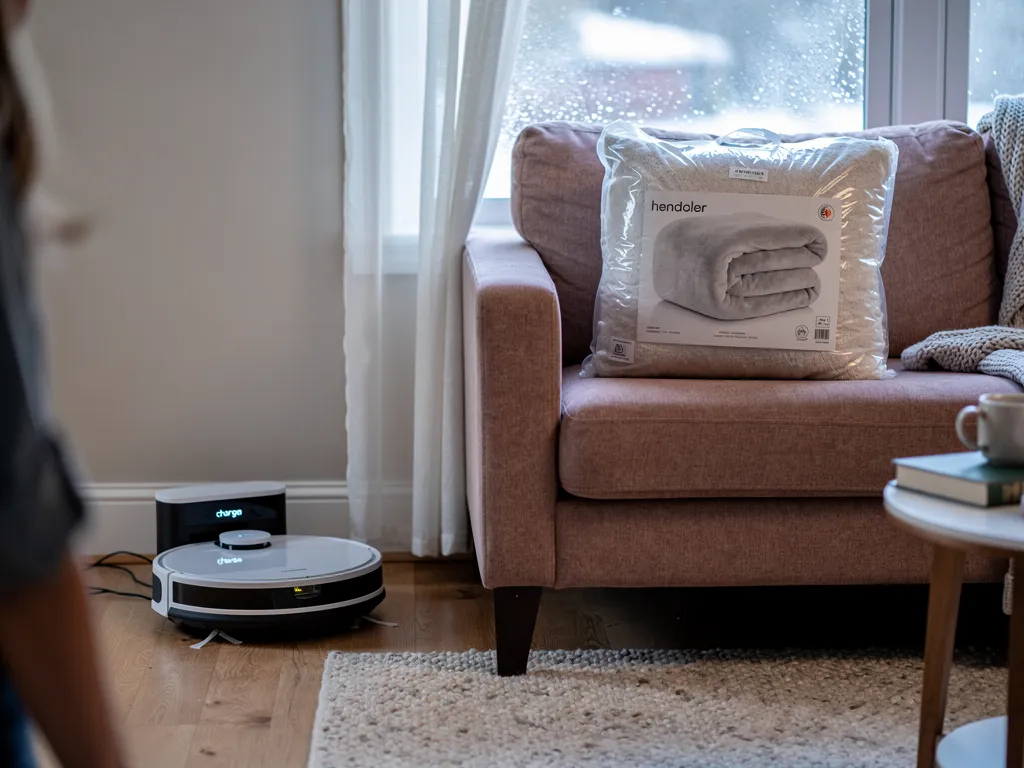
My dad has an electric blanket. Brand new. Still in the package it came in. He complains about being cold. Every day last winter, same conversation, he's freezing, the house is drafty, his joints ache. The electric blanket is sitting right there.
He won't use it.
There's also a robot vacuum mop sitting in its docking station, fully charged, ready to clean his floors at the push of a button. His floors need help. He knows they need help.
He ignores it.
I used to find this maddening. How can you complain about a problem when the solution is literally within arm's reach? But then I noticed something. He didn't buy the electric blanket. Someone gave it to him. He didn't pick out the robot mop. Someone else decided that was the answer to his floor problem. Ok, the vacuum was me.
These weren't his solutions. They were solutions chosen for him.
When the Fix Isn't Ours

I wanted to judge that. But then I thought about how many times I've done the same thing ignored perfectly good advice because I didn't ask for it, let a helpful tool collect dust because someone else decided I needed it. We've all been there. Someone hands us a fix we didn't request, and instead of relief, we feel something closer to… being managed.
It's not stubbornness. It's human. When we're not part of the solving, we don't connect with the solution the same way.
Receiving an answer we didn't help shape can feel less like support and more like a commentary on how we've been handling things.
So the blanket stays in the package. The mop stays in its dock. And the problems continue, not because solutions don't exist, but because they never quite became ours.
We all do this. We stop solving. Sometimes because we've reclassified the problem as permanent. Sometimes because the solution showed up without us and we never made it ours. And sometimes (if we're honest) because waiting is just easier than starting.
The Frame of Reference Hardens

Here's what I've learned: this pattern doesn't stay at home. It follows all of us to work and it scales.
When we've been told to "do more with less" for the third straight year, something shifts. The first time, we problem-solve. We find efficiencies, cut redundancies, figure out workarounds. The second time, we push harder, maybe with some resentment.
By the third time, a lot of us stop solving altogether. Not because we're being difficult. We've simply recategorized the problem. It moved from "something I can influence" to "something I endure."
And then comes the word that kills more momentum than any budget cut or reorg ever could.
Them.
"They need to fix this." "They should have thought of that before they rolled it out." "They don't listen anyway, so why bother?"
I've said versions of this myself. They is always whoever made the decision without asking leadership, corporate, the board, the client. And once we start waiting on them, solving stops. Not because we can't. But because we've decided it's not our turn. Someone else created the problem. Someone else should fix it.
Here's the part that's hard to see from the inside: they whoever they are usually doing the exact same thing one level up. Leaders are waiting on the board. The board is waiting on the market. Everyone is pointing upward or outward, and nobody is solving.
It's my dad's electric blanket all the way up the chain. Someone else chose the solution, so it's someone else's problem to make it work. And the whole system sits in a holding pattern, waiting for them to make the first move.
So How Do We Start Solving Again?
Here's what I've had to sit with myself: waiting on them feels justified. And sometimes it is. Sometimes the decision really was made badly, without input, without thought for the people who have to live with it. That's real. I'm not going to wave that away.
But here's what's also real: waiting doesn't move anything forward. Nothing gets warmer or cleaner on its own. The only thing that changes the outcome is someone actually reaching for the plug, the remote, the first small action — and that's the shift this moment calls for, not a bigger plan, just a deliberate first step.
What I've found is that getting back to solving doesn't start with a grand gesture or a new initiative from above. It starts with one honest question:
What can I actually do about this, right now, with what I have?
Not "what should they do." Not "what would I do if I had the budget / the authority / the headcount." What can I do. Today. With the tools, the role, and the influence I actually have.
That question is harder than it sounds. I know, because I've wrestled with it. It means letting go of the very satisfying position of being right about what's broken. It means picking up a solution. Even one we didn't choose and doing something with it.
Not because the process was fair. Not because leadership handled it well. But because the alternative is another year of cold nights and dirty floors, and at some point we have to decide that's not acceptable anymore.
Here's What I've Learned Personal and Work

They've taught me the same thing, just at different volumes.
Professionally, I spent years watching organizations cycle through the same patterns. Leadership gaps. Solutions imposed without involvement. Teams absorbing change after change without the support to sustain any of it.
I was dangerously close to filing it all under "that's just how organizations work." I could have waited for the industry to catch up. Waited for leaders to figure it out. Waited for them.
And honestly? For a while, I did.
Then something quieter happened. Not a grand revelation. More like a recalibration.
This is what I can do.
Not fix everything. Not overhaul every broken system. But take what I know about how implementation actually works, about what leaders must do personally that they cannot delegate, about why people resist and what that resistance is actually telling us and apply it where it matters.
Precisely. Behaviorally. Without waiting for conditions to be perfect before I start solving.
That shift changed everything. Not because the problems got smaller, but because I stopped outsourcing the solving to some unnamed them and started owning the part that was mine.
But here's the part I don't have figured out yet and it's the personal side.
The Part I'm Still Figuring Out
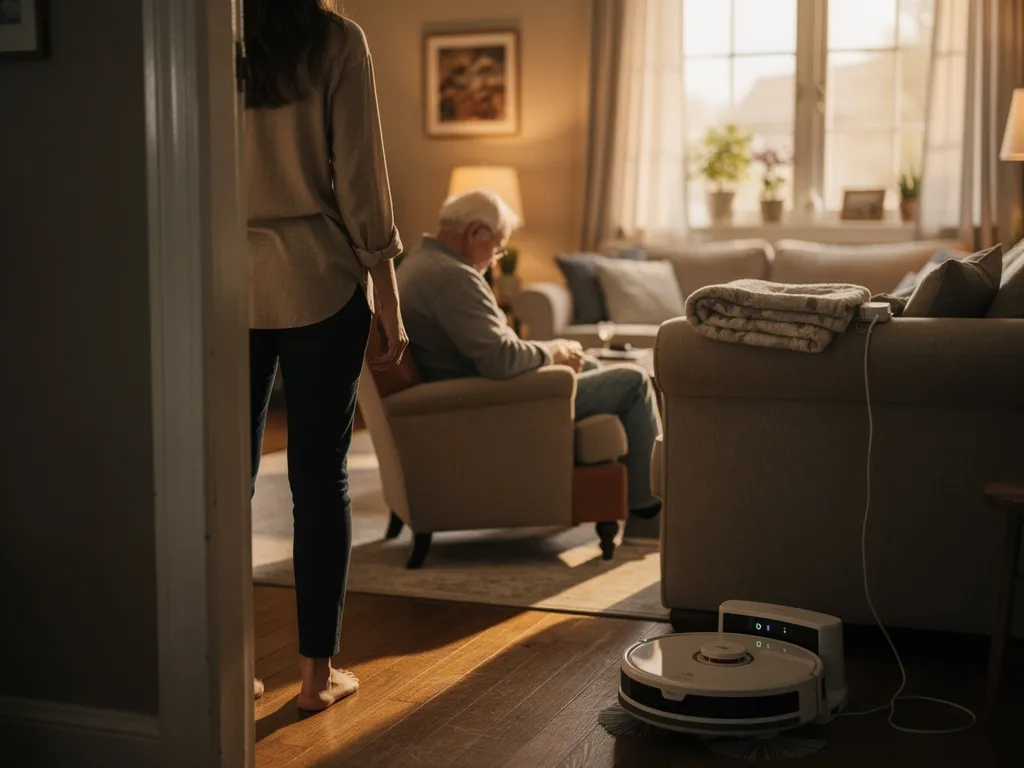
Part of me is still solving for my dad. The urge to plug in the blanket for him hasn't gone away. Same with the robot mop. Every visit, I want to press the button and say see? That wasn't so hard. Every time the floors are still a mess and he's still cold, the fixer in me wants to just… fix it.
But that's the very thing that doesn't work. I know this. I teach this. And I still have to remind myself.
The blanket can't become his until he's part of deciding to use it. The mop can't become his until it's his choice to press the button.
My job isn't to solve it for him. My job is to involve him: ask what's getting in the way, find out what would actually help, let him put his fingerprints on the solution and then breathe. And wait. And let him get there on his own timeline, not mine.
That breathing part is the hardest thing I do. Professionally and personally.
Because the truth at the center of everything I've learned is this: no one can change anyone else. Not a leader, not a consultant, not a daughter who really, really wants her dad to be warm.
The best we can do is create the conditions involve people, support them, walk beside them and then respect that the solving has to be theirs.
The Real Question
So if you're in the middle of change right now, leading it, living through it, or some exhausting combination of both, here's what I'd gently ask:
Where are we waiting on them? And where are we solving for someone instead of with them?
Both feel productive. Neither one is.
The way back is smaller than we think. It's not a new initiative or a better rollout plan. It's one person deciding to pick the thing up and start and another person stepping back far enough to let them.
We don't need them to go first. We just need to stop waiting. And sometimes, just as importantly, we need to stop fixing and start breathing.